

Travel introduces a variety of dynamic environments, from transit terminals to outdoor excursions. While packing the right wardrobe is a standard part of trip preparation, managing your jewelry collection requires specialized attention. Valuable and sentimental items are highly vulnerable to loss, theft, and physical damage when removed from the security of your home.
A successful strategy for traveling with jewelry balances intentional editing, secure packing techniques, and smart situational awareness. By implementing systematic habits before you depart and throughout your journey, you can enjoy your favorite accessories without compromising their safety or structural integrity.
Editing Your Travel Collection
The most effective way to mitigate risk is to limit the quantity and value of the items you bring. The packing phase should always begin with a rigorous curation process rather than grabbing pieces at random from your vanity.
-
Leave Irreplaceable Pieces at Home: Heirloom items, highly expensive gemstones, and sentimental jewelry that cannot be replaced should remain in a secure location at home. If the loss of a specific piece would ruin your trip, it does not belong in your luggage.
-
Focus on Versatility: Select items that transition smoothly between different settings. A classic pair of metal hoops, a neutral gemstone stud, a simple chain, and a versatile cocktail ring can cover casual day outings, business meetings, and formal evening dinners.
-
Coordinate with Your Planned Outfits: Lay out your clothing first, then assign jewelry specifically to those ensembles. If a piece only matches one highly specific shirt or dress, swap it for a more adaptable alternative.
-
Stick to a Single Metal Tone: Choosing either predominantly gold or predominantly silver for a short trip simplifies coordination. This reduces the total number of items needed to make your outfits feel complete and cohesive.
Smart Packing Strategies to Prevent Damage
Once you have selected your edited collection, the next hurdle is packing the items securely. The physical forces encountered during flights, train rides, and baggage handling can easily break delicate chains, scratch polished surfaces, and dislodge gemstones.
The Problem with Tangled Necklaces
Fine chains are highly susceptible to shifting during transit, resulting in complex knots that can take hours to untangle or cause the metal to snap under tension. To prevent this, you must keep the chains taut and isolated.
A highly effective household remedy is the drinking straw method. Thread one end of a necklace chain completely through a standard paper or plastic straw, then fasten the clasp. This rigid barrier keeps the chain extended, preventing it from looping around itself or other jewelry items. Place the straw inside a soft pouch for extra cushioning.
Alternatively, you can use plastic cling wrap. Lay out a sheet of cling wrap, place your necklaces parallel to one another with ample space between them, and press a second sheet of wrap firmly over the top. The airtight seal locks the metal in place, ensuring no movement occurs while your bag is in motion.
Keeping Earrings Paired and Secure
Small stud earrings are among the most frequently lost items during travel because they easily slip out of oversized compartments.
Utilizing oversized spare buttons is an excellent way to keep pairs together. Insert the posts of your earrings through the thread holes of a sturdy button and secure the backings. This holds the pair flat and prevents individual studs from floating freely in your bag.
For larger collections, a dedicated foam cosmetic wedge works remarkably well. Pierce the earring posts directly into the dense foam block. The material grips the posts securely, and the soft texture prevents delicate metal details from scratching against neighboring items.
Protecting Rings and Bracelets
Rings and solid bangles require structural support to ensure they do not get crushed under pressure or scratch one another.
A simple fabric pill organizer with individual zippered compartments offers excellent isolation for rings. You can dedicate one slot for each day of the trip, keeping the metal surfaces completely isolated from external friction.
For chunkier bracelets or statement rings, a small microfiber jewelry roll provides the best defense. Slide the rings onto the padded central bar and wrap the fabric exterior securely. This ensures that even if the case is dropped, the impact is absorbed by the padding rather than the jewelry.
Choosing the Right Travel Case
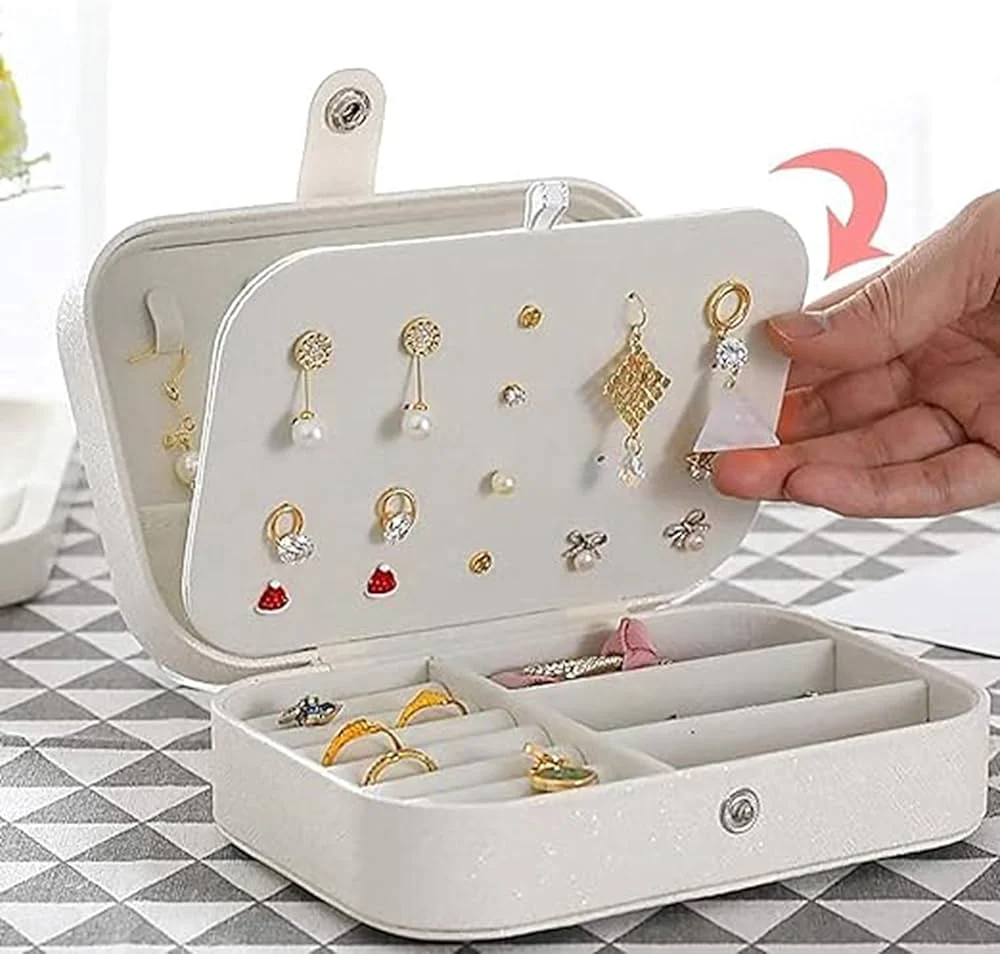
While DIY methods are highly functional for short trips, investing in a dedicated travel jewelry case provides long-term security and organization for frequent travelers. When selecting a case, look for specific structural features.
Rigid Exterior Shells
Avoid soft-sided fabric pouches that offer no protection against crushing forces. Opt for a case with a hard, structured exterior made of molded plastic, thick leather, or reinforced synthetic materials. This ensures that if a heavy suitcase shifts inside an overhead bin and presses against your bag, your delicate jewelry will not bear the brunt of the weight.
Soft Protective Linings
The interior compartments must be lined with a non-abrasive material. Look for ultra-soft microfiber, brushed suede, or velvet. Avoid cases with rough synthetic interiors or exposed internal zippers that could gouge soft metals like high-karat gold or sterling silver.
Specialized Internal Fasteners
A high-quality travel case does not rely on open pockets. Look for specialized features like leather snaps designed for rings, dedicated perforated panels for earring posts, and individual elastic security pouches positioned directly beneath necklace hooks to catch dangling pendants.
Security Practices During Transit and Arrival
How you carry your jewelry during transit is just as critical as how you pack it. A single security mistake can lead to catastrophic loss.
The Carry-On Only Rule
Never, under any circumstances, place fine jewelry inside checked luggage. Checked bags are subject to theft by baggage handlers, can be completely lost by airlines, or may be delayed for days. Keep your jewelry case inside your personal item, such as a backpack or purse, that stays physically with you at all times during the journey.
Navigating Airport Security
Avoid wearing excessive jewelry through the airport security checkpoint. Large metal cuffs, chunky rings, and heavy watches will trigger the metal detector, forcing you to remove them hurriedly at the conveyor belt. This fast-paced environment creates a high risk of leaving items behind in plastic bins. Instead, pack your jewelry securely in your bag before arriving at the airport, and put it on after passing through security.
Utilizing Hotel Safes Correctly
Upon arriving at your destination, immediately transfer your jewelry case to the in-room electronic safe. Do not leave the case sitting out on the vanity or hidden inside a suitcase, as hotel rooms are accessed regularly by cleaning staff and maintenance workers.
When configuring the hotel safe, use a unique code that is completely different from your phone passcode or home pin. Test the locking mechanism once while the safe is completely empty to verify that it functions perfectly before locking your valuables inside.
Environmental Protection and Maintenance
Travel exposes your jewelry to unique environmental variables like saltwater, chlorine, sunscreen, and extreme humidity. Protecting your sparkle requires adjusting your daily habits based on your itinerary.
The Impact of Moisture and Chemicals
Remove all jewelry before entering swimming pools, hot tubs, or the ocean. Chlorine acts as a harsh bleaching agent that can permanently discolor gold alloys and damage the structural integrity of gemstones. Saltwater can corrode metals and leave a dull residue on diamonds. Furthermore, fingers naturally shrink slightly in cold water, making it incredibly easy for rings to slip off unnoticed into the surf.
Apply sunscreens, perfumes, and body lotions completely and allow them to dry fully before putting on your jewelry. The chemical formulations in these products create a film over gemstones, drastically reducing their light refraction and making brilliant diamonds look cloudy and dull.
Cleaning on the Road
If your jewelry becomes dirty during an excursion, avoid using harsh hotel soaps or coarse paper towels to clean it. Instead, pack a small, dry microfiber polishing cloth in your travel kit. A gentle buffing with a clean cloth is sufficient to remove sweat, oils, and fingerprints without scratching delicate metal surfaces.
Frequently Asked Questions
Should I buy temporary insurance for my jewelry before going on a trip?
If you are traveling with high-value items that are covered under a standard homeowners or renters policy, you should verify if that coverage extends to international loss or theft. If it does not, obtaining a specialized jewelry insurance policy with global coverage is highly recommended. Ensure you document the items by taking clear photos and keeping digital copies of appraisals on your phone.
What is the safest way to carry jewelry while walking around a high-risk city?
The safest practice is to keep your jewelry completely concealed while navigating public spaces. Wear necklaces underneath your shirt and turn rings inward so the gemstones face your palm when utilizing public transit. Avoid wearing high-contrast, glittering items in crowded, unfamiliar areas where pickpocketing or distraction thefts are common.
Can I use plastic Ziploc bags to store sterling silver jewelry while traveling?
Yes, small airtight plastic bags are actually highly beneficial for storing sterling silver. Tarnish occurs when silver reacts with oxygen and ambient moisture in the air. Sealing individual silver pieces inside mini plastic zip bags helps prevent oxidation, keeping the metal bright throughout your trip.
How do I safely pack delicate pearl jewelry for travel?
Pearls are exceptionally soft organic gems that score very low on the hardness scale, meaning they scratch easily. Never pack pearls in the same compartment as hard gemstones or metals. Wrap pearl strands or earrings individually in a soft cotton flannel cloth or tissue paper before placing them inside a dedicated soft pouch.
Is it safe to wear fine jewelry on long-haul flights?
It is generally safer to pack your jewelry during long-haul flights. Extended sitting can cause your fingers and ankles to swell due to cabin pressure changes, making rings and tight bracelets physically uncomfortable or difficult to remove. Wearing minimal accessories ensures a comfortable flight and eliminates the risk of losing a piece in the tight confines of an airplane seat.
What should I do if a necklace becomes severely knotted despite my precautions?
Do not pull the knot tightly, as this will lock the chain links together or snap the metal. Lay the knotted chain flat on a hard, well-lit surface like a hotel desk. Apply a single drop of mineral oil or liquid soap to the knot to reduce friction. Use two fine sewing needles or open safety pins to gently tease the individual loops apart from the center outward until the knot unravels.
Should I bring replica jewelry instead of the real items when traveling internationally?
Using high-quality costume jewelry or cubic zirconia replicas for destination travel is a very practical strategy. It allows you to achieve the desired aesthetic for formal events and photographs without carrying the financial risk or anxiety associated with transporting authentic precious gems and metals through foreign transit systems.
Comments are closed.